
Politician Trading Strategy vs Factor Signals: Which Investment Approach is Right for You?
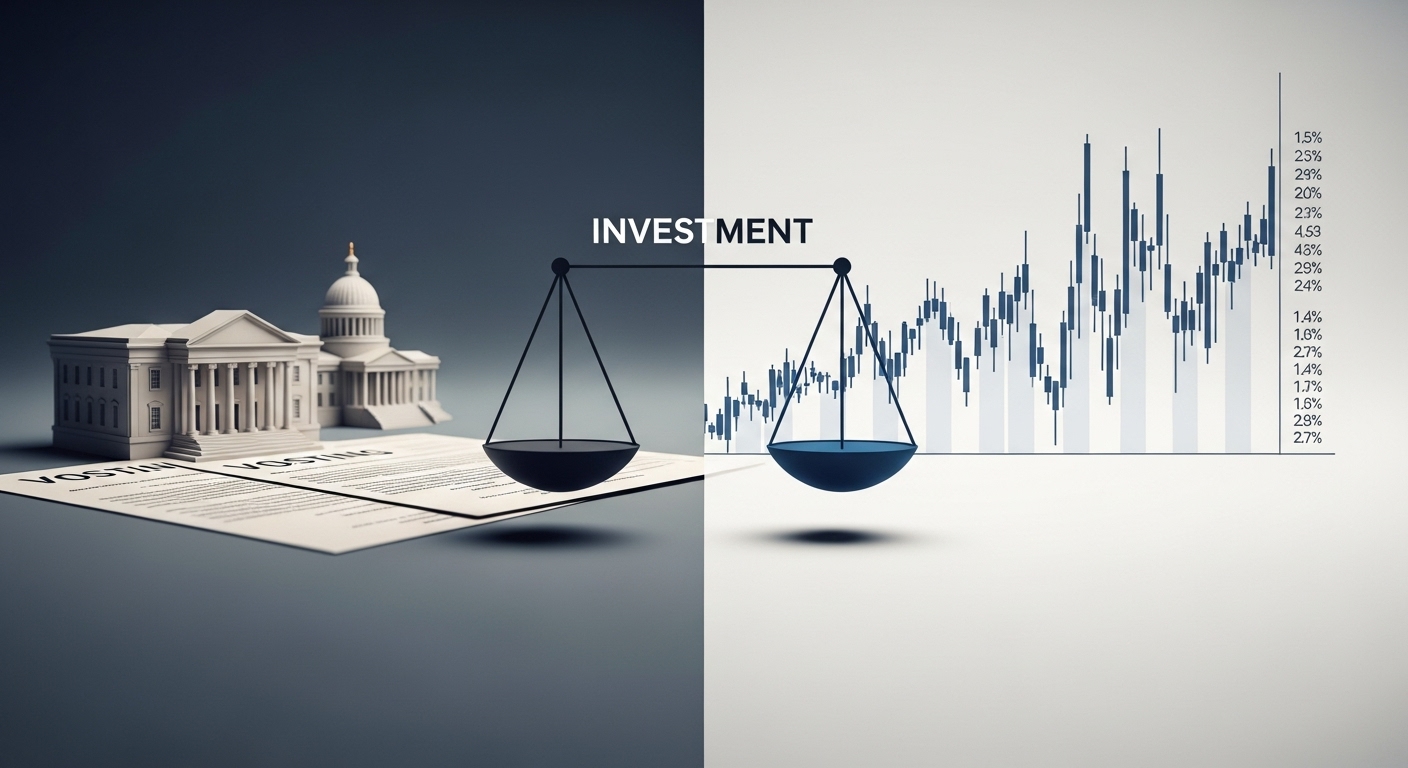
Investors increasingly turn to alternative signals to navigate complex markets, from politicians’ disclosed trades to systematic factor-based models. While political trading strategies offer contextual insights tied to policy and regulation, factor signals rely on disciplined, data-driven metrics grounded in financial fundamentals. Understanding the strengths and limitations of each approach can help investors choose or combine strategies aligned with their goals and risk tolerance.

Introduction
Investing involves making decisions based on various signals that reflect the health, trends, and potential of financial markets. As the world of finance becomes increasingly sophisticated, different strategies have emerged to guide investors. Among these are Politician Trading Strategy and Factor Signals, two distinct methods that use very different types of information to drive investment decisions. While both aim to inform investors, they come from different places and operate on different principles.
In this article, we will explore what Politician Trading Strategy and Factor Signals are, the key differences between them, how they work, and the benefits and risks associated with each. By the end of this guide, you'll have a clearer understanding of how these strategies might fit into your overall investment approach.
Key Takeaways
- Politician Trading Strategy involves tracking politicians' financial trades to identify potential signals based on political events and decisions.
- Factor Signals rely on financial metrics like price-to-earnings ratios and other quantitative data to identify investment opportunities.
- Politician Trading Strategy can provide insights into potential market shifts, but it is reactive and subject to political bias and data limitations.
- Factor Signals are systematic and based on measurable data, offering a disciplined, long-term approach to investing.
- Both strategies have their advantages: Politician Trading Strategy offers alternative insights, while Factor Signals ensure consistency and minimize emotional decision-making.
- Combining both strategies could provide a balanced approach, leveraging political insights while maintaining data-driven investment discipline.
What is a Politician Trading Strategy?
Politician Trading Strategy is a strategy that involves using information about politicians’ trades and financial activity to guide investment decisions. Political leaders, particularly those in government or key positions, are required to disclose their trades under specific regulations. Investors track these disclosures to identify trends or actions that might indicate upcoming market shifts. This strategy has been extensively studied, with research in the Financial Review indicating that while lawmakers once held a significant informational advantage, the implementation of the STOCK Act has narrowed this gap, making "abnormal returns" more difficult for outside investors to capture consistently.
Unlike investment strategies, Politician Trading Strategy relies on political factors such as new legislation, political ties, or public policy decisions. For example, when a politician invests in a particular industry, it may reflect exposure to sectors affected by policy debates, rather than foresight into specific outcomes, which could indicate upcoming changes in regulation or legislation that might impact the market or specific stocks.
At AlphaAI Capital, Politician Trading Strategy is one part of our broader, data-driven investment approach. While AI analyzes various market signals, including political activity, it’s used within a disciplined framework that doesn’t rely solely on reactive data. We integrate political insights into a well-rounded portfolio management process, where AI supports decisions based on predefined rules and oversight, ensuring strategies are grounded in evidence and aligned with investor goals.
What are Factor Signals?
Factor Signals, on the other hand, are a set of statistical metrics used to highlight possible market impacts based on historical data. These factors include common financial ratios and market metrics such as price-to-earnings (P/E) ratio, dividend yield, price-to-book ratio, and other fundamental metrics.
The core idea behind Factor Investing is that these metrics reflect a company’s underlying value and can be used to make predictions about future performance. For instance, a low P/E ratio might suggest that a stock is undervalued and thus presents an investment opportunity. Factor Signals aim to identify market inefficiencies and opportunities using data that can be tracked over time and across many different companies or sectors. Recent findings available on arXiv support this evolution, demonstrating how deep learning can be used to “optimize factor selection and risk management characteristics, which helps stabilize performance during varying market regimes.
alphaAI Capital uses data-driven AI models to help investors navigate these factors, focusing on consistent, disciplined, and structured decision-making. Unlike Politician Trading Strategy, which depends on interpreting political events, Factor Investing focuses on quantifiable financial data, making it more systematic and measurable.
Key Differences Between Politician Trading Strategy and Factor Signals
While both strategies are designed to help investors navigate markets, they operate on very different principles. Here are some key differences:
Data Sources:
- Politician Trading Strategy relies on political disclosures and actions, interpreting politicians’ trades to forecast potential impacts on the market.
- Factor Signals rely on financial data like company earnings, valuation ratios, and market trends, making it more grounded in measurable metrics.
Market Sentiment vs. Quantitative Data:
- Politician Trading Strategy is based on sentiment and the belief that political actions will lead to future market shifts. However, these shifts are often unpredictable and influenced by many factors beyond just trade activity.
- Factor Signals use historical and quantifiable data, providing a more structured and predictable approach to investing. These signals are systematic and less susceptible to the uncertainty of political events.
Time Sensitivity:
- Politician Trading Strategy is more reactive, responding to political events and actions as they happen. Political decisions can have immediate impacts, but they may also take time to fully unfold.
- Factor Signals are more focused on long-term trends and generally react more slowly to market shifts. They are focused on the inherent value of stocks over time rather than immediate news-driven movements.
The Pros and Cons of Politician Trading Strategy
Like any investment strategy, Politician Trading Strategy comes with its own set of advantages and challenges.
Pros of Politician Trading Strategy:
- Unique Insights: By tracking political decisions, investors may uncover early opportunities tied to legislation or policies that could drive market changes.
- Political Timing: Politicians often hold critical roles in shaping market-relevant policies. Their trading activity can offer insights into potential market shifts.
- Alternative Data: It offers an alternative to data-driven models by incorporating social and political trends that can influence markets.
Cons of Politician Trading Strategy:
- Uncertainty and Bias: Politicians' decisions can be influenced by many factors, not just economic rationale. Investors must interpret these actions carefully, as they can sometimes be driven by personal or political motives rather than market fundamentals.
- Limited Data Access: Data about politicians’ trades is often released after the fact, which limits how useful this information can be for predicting market movements.
- Volatility: Politician decisions can cause short-term market volatility, and these market movements may not always reflect long-term value.
The Pros and Cons of Factor Signals
Factor Investing is widely used because it provides a data-backed, systematic approach to investing. But it, too, has both advantages and limitations.
Pros of Factor Signals:
- Data-Driven: Factor Signals are based on hard data, which can be independently verified. This makes the approach transparent and reliable over the long term.
- Consistency: Because Factor Signals are grounded in financial fundamentals, they provide a consistent basis for investment decisions, regardless of market sentiment.
- Long-Term Focus: Factor Investing looks for opportunities based on long-term trends, which helps investors avoid knee-jerk reactions to short-term market fluctuations.
Cons of Factor Signals:
- Data Limitations: Factor Signals rely on historical data, which may not always account for sudden market shifts or external events that affect markets.
- Not Immune to Volatility: While they are designed to smooth out market noise, factors do not eliminate the risks associated with market volatility.
- Requires Expertise: Properly interpreting Factor Signals requires expertise in financial metrics and market conditions. Misinterpretation can lead to suboptimal investment choices.
Which Investment Strategy is Best for You?
The choice between Politician Trading Strategy and Factor Signals depends largely on your investment goals, risk tolerance, and preferences.
Politician Trading Strategy might be more suitable for investors who:
- Are willing to engage with alternative data and are comfortable with interpreting political signals.
- Want to capitalize on political events and the resulting market shifts.
- Have a higher tolerance for risk and uncertainty.
Factor Signals may be better for investors who:
- Prefer a systematic, data-driven approach to investing.
- Want to base decisions on long-term trends rather than short-term political events.
- Seek a more conservative and measured approach to market fluctuations.
How to Integrate Politician Trading Strategy and Factor Signals
Many investors may choose to combine the Politician Trading Strategy with Factor Signals to diversify their approach. By doing so, they can gain a comprehensive view of both fundamental market factors and the potential impact of political events.
A hybrid strategy might involve using factors to identify strong, undervalued stocks while also monitoring political developments that could impact certain sectors. For example, an investor might combine a focus on companies with solid financial fundamentals (using Factor Signals) with political news regarding upcoming regulations that could affect those companies.
Real-World Applications and Use Cases
Both Politician Trading Strategy and Factor Signals have been used across a range of investment approaches. At alphaAI Capital, we emphasize the use of data-driven approaches to investing. While we consider the potential impact of political events, our core strategies are grounded in sound financial data and disciplined, systematic approaches.
For instance, during political events such as tax reforms or trade agreements, Politician Trading Strategy might reveal immediate market movements. At the same time, Factor Signals would allow investors to assess the long-term viability of stocks impacted by those events.
Final Thoughts: Is Politician Trading Strategy or Factor Signals Right for You?
Each of these strategies has its own strengths and weaknesses. Politician Trading Strategy provides alternative insights into market movements, particularly when political actions are likely to have a significant effect. However, it is more speculative and less systematic. Factor Signals, on the other hand, offer a more structured and data-driven approach but may not always be quick to adapt to sudden changes.
As an investor, the right choice will depend on your personal preferences and goals. Some may find value in using both strategies together, while others may prefer to focus on one based on their risk tolerance and investment philosophy.
Related Questions for Politician Trading Strategy vs Factor Signals
- What exactly is a politician's trading strategy?
Politician Trading Strategy involves using data about politicians' trades and financial activities to guide investment decisions, interpreting their actions as potential signals for market changes. - How do Factor Signals work in trading?
Factor Signals use quantifiable financial metrics, such as P/E ratios and dividend yields, to identify investment opportunities based on company fundamentals. - Which strategy is better for investors?
The choice depends on your investment style. Politician Trading Strategy offers unique insights into market-moving political actions, while Factor Signals provide a more disciplined, data-driven approach to investing. - Can I use the Politician Trading Strategy and Factor Signals together?
Yes, many investors find value in using both strategies to gain a comprehensive view of the market, balancing short-term political signals with long-term financial data. - Can these strategies protect me during a market crash?
No strategy can guarantee protection against market losses. While certain factors like "Low Volatility" are designed to be more resilient during downturns, all investments carry the risk of loss, and diversification does not ensure a profit. - How does alphaAI Capital use AI in its investment strategies?
AlphaAI Capital uses AI to analyze market signals, including political and financial data, to support investment decisions. AI helps us adapt to market conditions while supporting investment processes under established compliance oversight. - How can I get started with AI-driven investing at alphaAI Capital?
Simply sign up, complete a risk profile, and choose your investment strategy. Our AI-driven platform will then manage your portfolio based on your goals and risk tolerance. - Is AI trading at alphaAI Capital safe and compliant?
Yes, as an SEC-registered investment advisor, alphaAI Capital ensures all AI-driven strategies comply with regulatory standards, prioritizing transparency, risk management, and investor protection. - Is it legal to follow a politician's trades?
Yes. In the United States, the STOCK Act requires politicians to publicly disclose their trades. These disclosures are meant for public transparency and are available for any investor to review.
Systematic investing, made accessible.
Educational & Research Disclosure: The content provided is for informational and educational purposes only and is not intended to constitute investment advice, a recommendation, solicitation, or offer to buy or sell any security. Any discussion of market trends, historical performance, academic research, models, examples, or illustrations is presented solely to explain general financial concepts and does not represent a prediction, guarantee, or assurance of future results. Past performance is not indicative of future results. All investing involves risk, including the possible loss of principal.



Frequently Asked Questions
Find answers to common questions about alphaAI.