
What Is Drawdown in Investing?
Drawdown is one of the few risk metrics that describes portfolio pain in terms investors actually experience. Annualized return can look attractive, volatility can appear moderate, and a strategy can still prove difficult to hold if its peak-to-trough declines are too deep or too long. Portfolios are lived as paths, not averages.

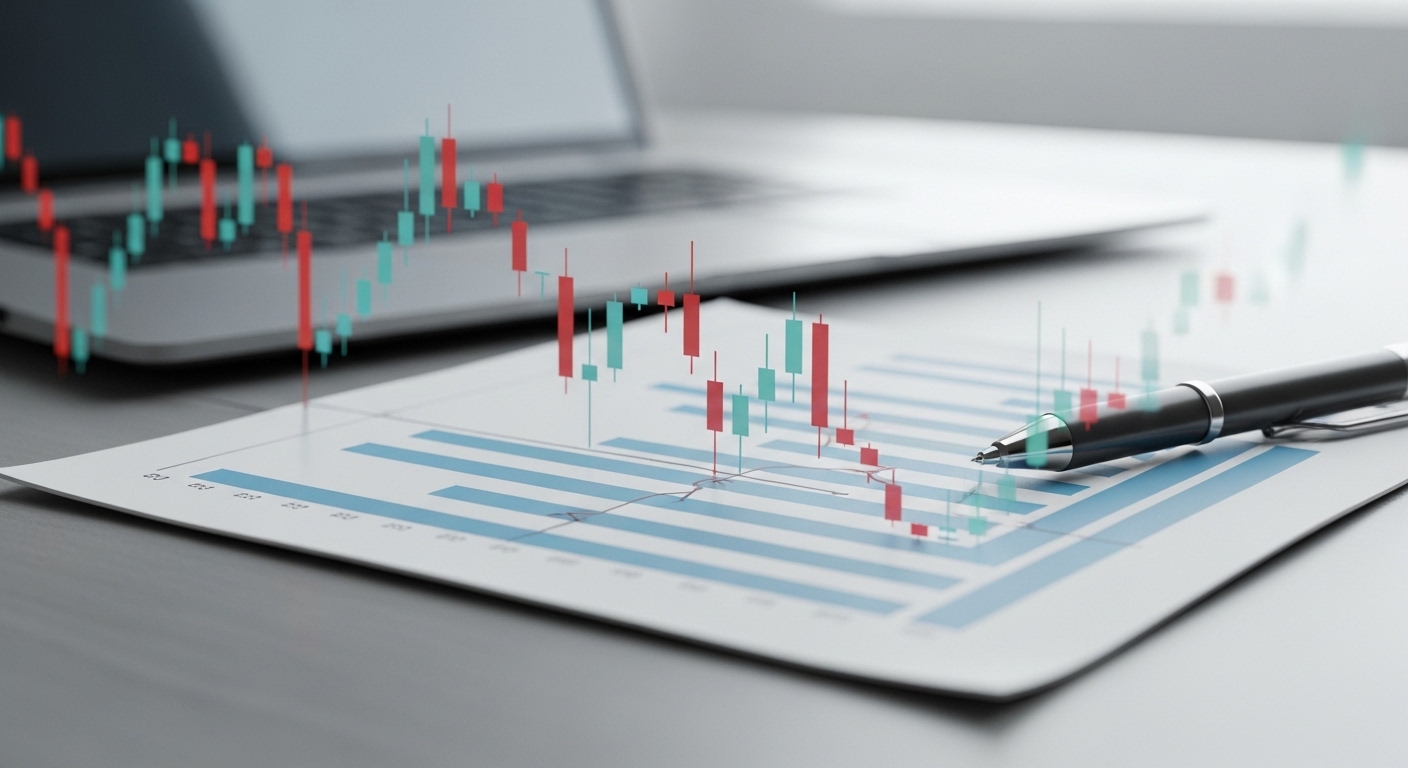
Drawdown is one of the few risk metrics that describes portfolio pain in terms that investors actually experience. Annualized return can look attractive, volatility can appear moderate, and a strategy can still prove difficult to hold if its peak-to-trough declines are too deep or too long. Drawdown matters because portfolios are lived as paths, not averages.
A precise understanding of drawdown changes how investors evaluate risk, compare strategies, and size positions. It also sharpens a more important question: not just how much a portfolio may earn over time, but how much damage it may sustain on the way there. Morningstar defines maximum drawdown as the decline of an investment from peak to trough during a specific period, while Interactive Brokers defines max drawdown as the largest cumulative percentage decline from the highest peak value to the lowest trough after that peak.
Key Takeaways
- Drawdown measures the decline from a prior peak to a later trough, which makes it a direct measure of realized downside experience.
- Maximum drawdown is the worst such decline over the period measured, not a forecast of future losses.
- Depth matters, but duration matters too, because the recovery period shapes both portfolio math and investor behavior.
- Drawdown and volatility are related but not interchangeable, because volatility measures variability while drawdown measures actual damage from a prior high.
- A risk-aware portfolio can use drawdown as one input in allocation, sizing, and rebalancing decisions, but no metric eliminates uncertainty.
- Directional forecasting attempts are possible; deterministic certainty is not technically achievable, which is why drawdown analysis still belongs inside Human-on-the-Loop governance.
Drawdown measures the downside from a high-water mark.
Drawdown measures how far an investment or portfolio falls from a previous high before it establishes a new one. That makes it different from a generic “loss” figure, because drawdown is anchored to a peak and evaluated along a path rather than at an arbitrary endpoint. CFI describes drawdown as the decline in value of an investment or portfolio from a relative peak to a relative trough, and Morningstar’s definition centers on the same peak-to-trough logic.
That distinction is not technical trivia. A portfolio can still be positive over a five-year period and yet have experienced a severe drawdown within that window. For an investor allocating capital, the relevant question is often not whether the ending point was positive, but whether the interim decline was tolerable.
Drawdown is not the same as loss
A loss can describe any negative result, realized or unrealized. Drawdown is narrower and more informative in portfolio analysis because it tells you how far the portfolio fell after reaching a high. A position down 8 percent from cost is a loss; a portfolio down 18 percent from its recent peak is a drawdown. The second statement says more about investor experience and recovery burden.
Maximum drawdown is the worst historical case in the period measured
Maximum drawdown is simply the largest peak-to-trough decline observed in the selected period. That makes it a useful comparison tool, but also a limited one. It tells you what the worst historical decline was in that sample; it does not tell you the next one will be similar. Morningstar and Interactive Brokers both define maximum drawdown as the worst peak-to-trough decline during the relevant period.
Drawdown matters because recovery is asymmetrical
Drawdown matters because losses compound differently from gains. A 10 percent decline requires an 11.1 percent gain to recover. A 20 percent decline requires 25 percent. A 50 percent drawdown requires 100 percent. That asymmetry is one reason sophisticated investors monitor drawdown closely even when long-term return targets remain unchanged.
This is also why CFI’s discussion of drawdown emphasizes two elements: the amount of the drawdown and the time required to recover from it. A 15 percent decline that recovers in a few months is materially different from a 15 percent decline that takes years to reverse.
Duration matters as much as depth
Time underwater is often as important as the depth of the decline itself. A portfolio that remains below its previous high for a long period can impose opportunity cost, behavioral strain, and a distorted sense of portfolio quality. Investors often underestimate this until they experience it directly.
That behavioral effect is one reason drawdown often carries more practical weight than abstract risk statistics. Investors do not abandon a strategy because they read a standard deviation figure. They abandon it when the portfolio falls far enough, or for long enough, that the original discipline becomes difficult to maintain.
Drawdown is calculated simply, but interpreted carefully
The drawdown formula is straightforward:
Drawdown = (Trough Value - Peak Value) / Peak Value
If a portfolio rises from $100,000 to $125,000 and then falls to $100,000, the drawdown is:
($100,000 - $125,000) / $125,000 = -20%
Interactive Brokers describes max drawdown as the largest cumulative percentage decline from the highest peak to the lowest trough after that peak, which is the same underlying logic used in practical portfolio analysis.
The interpretation is where sophistication matters. A 20 percent drawdown in a broad equity portfolio is not analytically identical to a 20 percent drawdown in a concentrated thematic portfolio, a leveraged ETF strategy, or an income-focused allocation. The number is the same. The implications are not.
Drawdown and volatility are not interchangeable
Drawdown and volatility describe different dimensions of risk. Volatility measures the variability of returns, usually around an average. Drawdown measures a realized decline from a prior high. One is about movement; the other is about damage.
A portfolio can exhibit moderate volatility and still experience a painful drawdown if losses cluster in one direction. Conversely, a portfolio can show noticeable variability without suffering an especially deep peak-to-trough decline. That is why sophisticated investors often track both metrics rather than treating either one as complete on its own. Morningstar treats maximum drawdown as a downside-oriented measure, which is conceptually different from general return variability.
Maximum drawdown is useful, but only as one lens
Maximum drawdown is often the most intuitive version of drawdown for comparing strategies, funds, or portfolio constructions. It helps answer a simple question: how bad did the worst historical decline get? For investors evaluating downside tolerance, that question matters.
It is not sufficient on its own. Maximum drawdown is sample-dependent, period-dependent, and backward-looking. A strategy with a modest historical maximum drawdown may simply not have lived through its hardest environment yet. A strategy with a severe historical drawdown may still be preferable if the return profile, diversification role, or recovery behavior justifies it.
That is why drawdown works best inside a wider risk framework rather than as a standalone selection tool.
Drawdown is a portfolio-construction issue, not just a reporting metric
Drawdown becomes useful when it changes how a portfolio is built. It can reveal hidden concentration, identify sizing problems, and expose whether diversification is weaker than it appears. A portfolio can look broad by the number of holdings and still behave as a narrow bet if the underlying exposures are highly correlated.
This is where risk-aware investing becomes more than a label. Investors who care about drawdown usually end up caring about:
- Concentration by issuer, sector, or theme.
- Correlation between supposedly different holdings.
- Position sizing relative to portfolio-level damage.
- Rebalancing after strong trends distorts the original allocation.
- The relationship between expected return and tolerable decline.
That logic sits behind approaches such as alphaAI Capital’s risk-aware investment growth strategy, where downside behavior is treated as part of portfolio design rather than an after-the-fact statistic.
Systematic strategies can use drawdown as a risk input
A systematic strategy can incorporate drawdown awareness through predefined rules rather than purely discretionary judgment. That might include reviewing concentration after a rally, reassessing factor exposure when correlations shift, or tightening risk budgets when downside behavior exceeds expectations.
The correct framing remains probabilistic. Probabilistic, forward-looking statistical forecasts conditioned on historical and disclosed data can inform portfolio decisions, but deterministic certainty is not technically achievable. Drawdown-aware design is therefore not drawdown prevention. It is a disciplined way to structure the response to downside risk.
That is also why alphaAI Capital’s article on how AI adjusts factor exposure without predicting the market is relevant here. The point is not that a model “knows” where markets will go. The point is that a process can review changing portfolio conditions more consistently than ad hoc reactions allow.
Human Oversight
Human-on-the-Loop governance is a structure designed to align systematic execution with fiduciary accountability. Drawdown analysis belongs inside that governance framework because numbers do not interpret themselves.
Human professionals design the architecture, define risk parameters, monitor for model drift, and retain intervention authority. That matters because the same drawdown can mean different things depending on liquidity, concentration, implementation constraints, and the broader market regime. Model explainability, or the ability to explain how forecasts are generated, is therefore not cosmetic. It determines whether a portfolio decision can be reviewed, challenged, and understood.
That is the practical backdrop to alphaAI Capital’s discussion of how AI investing platforms manage risk frameworks, guardrails, and governance, and whether AI replaces human judgment in investing. Drawdown metrics can improve discipline, but they do not remove the need for judgment.
Practical examples make drawdown easier to interpret
A broad equity portfolio may experience a large drawdown and still remain appropriate for a long-horizon investor if the allocation is deliberate and the investor can tolerate the recovery path.
A concentrated thematic portfolio may produce the same long-term return as a diversified alternative while imposing much deeper interim drawdowns. In that case, the return number alone understates the actual investment experience.
A risk-aware systematic portfolio may still suffer drawdowns, but it is more likely to review exposure, sizing, and concentration through defined rules rather than discovering those issues only after damage has compounded.
Drawdown is one of the clearest downside metrics, but it is still incomplete
Drawdown tells you how severe past declines were and how burdensome recovery may be. It does not tell you what happens next. It does not eliminate regime uncertainty. It does not substitute for judgment about portfolio objectives, liquidity needs, or behavioral tolerance.
That limitation is not a weakness of the metric. It is a reminder of what intelligent risk analysis requires. Investors do not need a single number that answers everything. They need a framework that makes the portfolio’s real vulnerabilities visible before markets expose them at full scale.
A portfolio’s quality is not defined only by how efficiently it compounds in favorable periods. It is defined by whether its drawdowns were coherent, chosen, and survivable.
Questions Relevant To What is Drawdown in Investing
What is drawdown in investing?
Drawdown is the decline in an investment or portfolio from a previous peak to a later trough before a new high is reached.
What is maximum drawdown?
Maximum drawdown is the worst peak-to-trough decline observed over the period being measured.
Is drawdown the same as volatility?
No. Volatility measures the variability of returns, while drawdown measures the actual decline from a prior high.
Why does recovery take longer after large drawdowns?
Because losses compound asymmetrically, larger declines require disproportionately larger gains to return to the previous peak.
Can diversification reduce drawdown?
Diversification may reduce concentration-driven drawdown risk, but it does not eliminate losses or guarantee smaller declines.
Systematic investing, made accessible.
Educational & Research Disclosure: The content provided is for informational and educational purposes only and is not intended to constitute investment advice, a recommendation, solicitation, or offer to buy or sell any security. Any discussion of market trends, historical performance, academic research, models, examples, or illustrations is presented solely to explain general financial concepts and does not represent a prediction, guarantee, or assurance of future results. Past performance is not indicative of future results. All investing involves risk, including the possible loss of principal.

Frequently Asked Questions
Find answers to common questions about alphaAI.