
AI Investing vs Bot Trading: What Is the Difference and Why It Matters for Investors
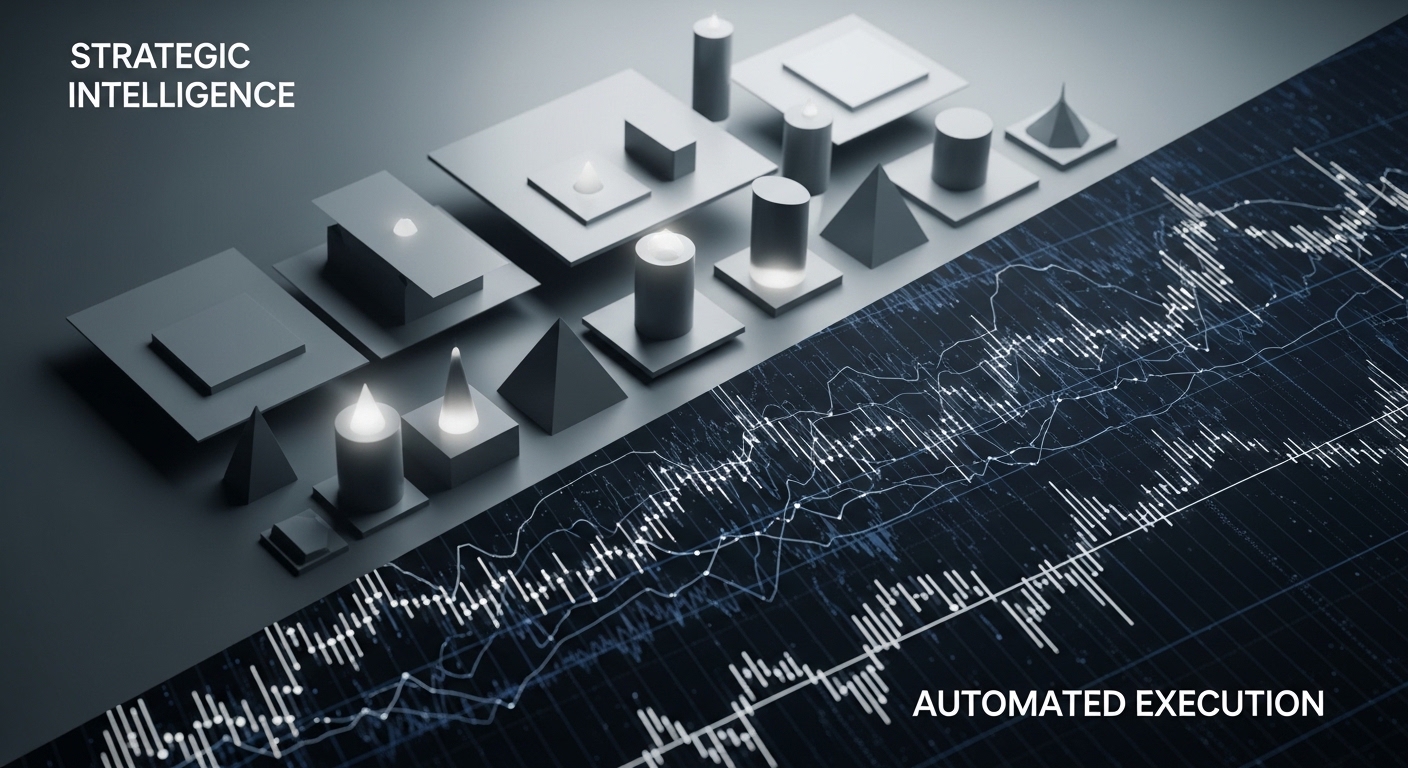
AI investing and bot trading are often used interchangeably, but they describe very different approaches to automation. Bot trading typically focuses on executing predefined trading rules at the individual trade level, while AI investing applies data-driven models at the portfolio level to support exposure management, rebalancing, and risk controls. The distinction matters because automation alone does not define how risk is managed. Understanding where decisions are made, and within what constraints, is critical when evaluating modern investment platforms.

Introduction
Automation plays a growing role in how portfolios are built, monitored, and managed. As technology evolves, investors are increasingly exposed to terms like AI investing and bot trading. These labels are often used interchangeably, but they describe different approaches with different objectives and risks.
Understanding the distinction is especially important when evaluating modern investment platforms. Some systems focus on automating individual trades, while others apply artificial intelligence at the portfolio level to support allocation, risk management, and rebalancing decisions.
At alphaAI Capital, AI is used as a systematic decision-support tool within defined rules and oversight. This article explains how AI investing differs from bot trading, where the two overlap, and why the distinction matters for investors evaluating automated strategies.
Key Takeaways
- AI investing focuses on portfolio-level decision support and risk management.
- Bot trading focuses on the automated execution of predefined trading rules.
- AI investing emphasizes structure, discipline, and exposure management.
- Bot trading is often oriented toward tactical or short-term strategies.
- Neither approach predicts markets nor guarantees outcomes.
- Process design and constraints matter more than labels.
What Is AI Investing?
AI investing refers to the use of data-driven models to support investment decisions across an entire portfolio. Rather than attempting to forecast specific market outcomes, AI systems analyze large sets of structured inputs to help inform how risk and exposure are managed over time. Academic research shows that machine learning in finance is used to support structured decision-making and to analyze complex inputs, without implying reliable market prediction.
These inputs may include price behavior, volatility, correlations, liquidity measures, and other market characteristics. The goal is not prediction, but consistency and discipline in how decisions are applied as conditions change.
At alphaAI Capital, AI operates within predefined constraints. Models support decisions related to portfolio positioning, rebalancing, and risk controls, while human oversight remains central. AI does not function autonomously and does not replace judgment. It supports a structured investment process.
AI investing is commonly used to address questions such as:
1) How should portfolio exposure adjust as volatility changes?
2) How should risk be distributed across assets or strategies?
3) When should predefined rebalancing rules be applied?
The emphasis is on repeatable processes rather than discretionary trade-by-trade decisions. A topic explored further in our discussion of AI trading benefits and limitations.
What Is Bot Trading?
Bot trading refers to automated systems that execute trades when specific conditions are met. These conditions are typically defined in advance and may rely on technical indicators, price thresholds, or timing rules.
Most trading bots operate at the strategy or trade level rather than the portfolio level. Their primary function is execution. Once rules are set, trades are placed automatically without additional context about broader portfolio exposure.
Common examples include:
- Trend-following bots that trade based on momentum signals.
- Grid bots that place buy and sell orders within price ranges.
- Mean-reversion bots that respond to deviations from historical averages.
While some bots are marketed as AI-powered, many rely on static rules rather than adaptive models. Automation alone does not imply artificial intelligence.
Why These Terms Are Often Confused
Confusion arises because both approaches involve automation. In practice, AI investing frameworks often use automated tools to implement decisions efficiently. Execution may be handled programmatically, but the investment logic resides at the portfolio level.
Bot trading, by contrast, typically defines the investment logic and execution together at the trade level.
The difference is not whether automation exists, but where decisions are made and how risk is managed.
Different Investor Objectives, Different Tools
Investors are rarely choosing between AI investing and bot trading for technical reasons alone. Most are trying to solve practical problems.
- Some want a systematic way to manage portfolios without constant intervention.
- Some want discipline during volatile or stressful markets.
- Some want automation to reduce emotional decision-making.
AI investing and bot trading address these goals in different ways, with different tradeoffs.
Core Differences That Matter
Portfolio Scope
AI investing evaluates decisions in the context of the entire portfolio. Position sizing, diversification, and correlations are part of the decision process.
Bot trading typically evaluates each strategy independently, without broader portfolio awareness.
Time Horizon
AI investing is often designed to manage exposure across market cycles, even if adjustments occur frequently.
Bot trading is commonly used for shorter-term or tactical strategies, although holding period alone does not define risk.
Signal Design
AI investing models may combine multiple signals and features to inform decisions within constraints, including traditional financial data and, in some cases, alternative inputs such as political disclosures, which are discussed in our comparison of politician trading strategies and factor signals.
Bot trading strategies usually rely on predefined thresholds or indicators that trigger trades directly.
Risk Management
AI investing frameworks emphasize exposure limits, diversification rules, and drawdown controls.
Bot trading often relies on trade-level risk controls such as stop logic, which may not address portfolio-level risk.
Oversight and Governance
At alphaAI Capital, AI models are monitored for behavior, assumptions, and alignment with risk frameworks. Human oversight is embedded in the process.
Bot trading systems may require less oversight by design, but this also increases the risk of unmonitored drift or unintended behavior.
Benefits and Limitations of AI Investing
Potential Benefits
AI investing can support consistency by applying rules systematically across changing conditions. It may help process complex information efficiently and rebalance portfolios according to predefined criteria.
When implemented responsibly, it can support disciplined risk management.
Limitations and Risks
AI models depend on historical data and assumptions. When market behavior changes materially, models may respond in unexpected ways.
Model risk, data quality issues, and overfitting remain ongoing concerns. AI responds to inputs. It does not understand markets.
Benefits and Limitations of Bot Trading
Potential Benefits
Bot trading can automate execution and reduce delays associated with manual trading. It can enforce discipline by following rules consistently.
For certain strategies, automation may improve operational efficiency.
Limitations and Risks
Bots are often sensitive to parameter choices. Small changes in market behavior can lead to significantly different outcomes. Regulatory guidance from FINRA and the SEC highlights that algorithmic and automated trading strategies can create operational and risk challenges, emphasizing the need for supervision and risk controls.
Transaction costs, slippage, liquidity constraints, and platform risk can materially affect results. Automation does not reduce uncertainty.
How alphaAI Capital Fits Into This Distinction
alphaAI Capital’s approach aligns with AI investing rather than bot trading. AI is used to support portfolio-level decisions within defined rules, constraints, and human oversight.
Automation may be used to implement decisions efficiently, but it does not define the investment logic. Risk management, exposure limits, and monitoring remain central.
This distinction matters for investors evaluating platforms that use automation. The presence of AI or bots alone does not describe how risk is managed.
Common Misconceptions
- AI does not predict markets. It supports structured decisions under uncertainty.
- Trading bots do not eliminate risk. They automate execution.
- Backtests do not guarantee outcomes. They reflect assumptions applied to historical data.
- Greater complexity does not necessarily mean greater robustness.
Risks That Apply to Both Approaches
- Market risk and volatility.
- Model and strategy risk.
- Operational and technology risk.
- Liquidity and gap risk.
- Fees, taxes, and turnover considerations.
Automation changes how risk is expressed, not whether it exists.
Time horizon alone does not define risk, particularly when leverage or path dependency is involved, as explained in our guide on leveraged ETFs and their mechanics.
Final Thoughts
AI investing and bot trading represent two different ways of using automation in markets. One focuses on portfolio-level decision support and risk management. The other focuses on executing predefined trading rules.
For investors, the most important factor is not the label, but whether the process is disciplined, transparent, and aligned with their tolerance for uncertainty.
Understanding how a platform applies automation is essential to evaluating whether it fits an investor’s goals.
Frequently Asked Questions
What is the main difference between AI investing and bot trading?
AI investing supports portfolio-level decisions and risk management. Bot trading automates trade execution based on predefined rules.
Does alphaAI Capital use trading bots?
No, alphaAI Capital does not use standalone trading bots. It uses AI as a systematic decision-support tool to help manage portfolio exposure, risk, and rebalancing within predefined rules and human oversight.
Does AI investing guarantee better results?
No. AI does not eliminate market risk or guarantee outcomes.
Can automated strategies be used long term?
Outcomes depend on volatility, assumptions, and risk controls rather than automation alone.
How should investors evaluate AI Investing platforms?
By examining structure, constraints, oversight, and transparency rather than marketing claims.
Systematic investing, made accessible.
Educational & Research Disclosure: The content provided is for informational and educational purposes only and is not intended to constitute investment advice, a recommendation, solicitation, or offer to buy or sell any security. Any discussion of market trends, historical performance, academic research, models, examples, or illustrations is presented solely to explain general financial concepts and does not represent a prediction, guarantee, or assurance of future results. Past performance is not indicative of future results. All investing involves risk, including the possible loss of principal.



Frequently Asked Questions
Find answers to common questions about alphaAI.